
MTN vs Telecel vs AT Ghana: Best Network for Your Area

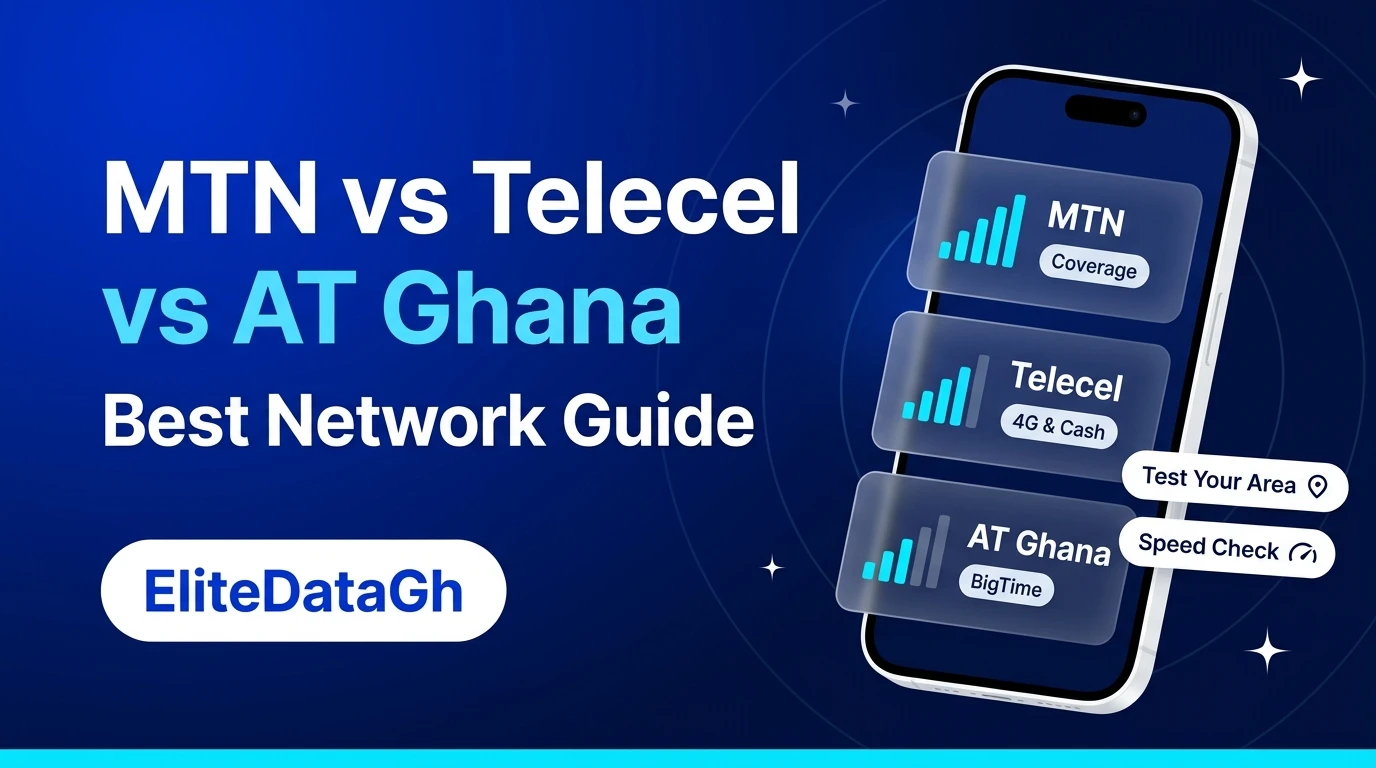
Table of Contents
- Quick Side-by-Side Comparison: MTN vs Telecel vs AT Ghana
- 1. Network Coverage, Tower Load, and Real Data Speeds
- 2. Data Bundles, Validity Rules, and Everyday Value
- 3. Mobile Money Fees and Agent Liquidity
- How to Pick the Best Network in Your Exact Building
- Practical Recommendations by Lifestyle (Best Dual-SIM Combos)
- Frequently Asked Questions
Choosing the best mobile network in Ghana depends far more on the nearest cell tower serving your exact room, hostel, or office than on national advertising claims. Nationally, MTN Ghana leads in coverage (~99.2 percent 4G population footprint) and median speed, Telecel Ghana excels as an urban challenger with 0 percent same-network Telecel Cash P2P transfers, and AT Ghana delivers flexible BigTime Non-Expiry value in covered city corridors backed by infrastructure sharing.
However, national averages hide local congestion. Because MTN holds roughly 80 to 81 percent of Ghana mobile data subscriptions, its nearby mast in crowded neighborhoods often saturates between 7:30 PM and 10:30 PM while an adjacent Telecel or AT sector with fewer simultaneous users streams effortlessly. Testing signal performance where you actually live and work beats guessing by brand reputation.
Quick Side-by-Side Comparison: MTN vs Telecel vs AT Ghana
| Comparison Factor | MTN Ghana | Telecel Ghana | AT Ghana |
|---|---|---|---|
| Mobile Data Market Share (NCA) | Roughly 80 to 81 percent | Roughly 14.5 to 16.1 percent | Roughly 3.8 to 4.2 percent |
| 4G Footprint and Travel Reliability | Strongest nationwide and highway reach | Strong in major cities, expanding sites | City-focused with national roaming support |
| Typical National Speed Tier | Highest median speeds (~55.8 Mbps Ookla) | Competitive urban speeds, varies outside metros | Solid city pockets, slower under roaming handoff |
| Evening Peak Congestion Risk | High in dense Accra, Kumasi, campus zones | Moderate in core city centers | Lower user load per active sector |
| Flagship Data Structure | *138# Standard and Non-Expiry bundles | *700# Bossu, Made4Me, plus Fibre (*900#) | *111# BigTime Non-Expiry and Sika Kokoo |
| Mobile Money On-Net P2P Cost | Free up to GHS 100, then 0.75 percent | Free (0 percent) across all amounts | Free up to GHS 100, then 0.75 percent |
| Agent Cash-Out Availability | Widest street-level kiosk density nationwide | Strong in cities and district hubs | Concentrated mainly in urban centers |
| 5G Spectrum Readiness (2026) | Direct 700 MHz and 3 GHz bands acquired | Direct 2.3 GHz spectrum allocation acquired | Shared network and alignment focus |
1. Network Coverage, Tower Load, and Real Data Speeds
According to 2026 National Communications Authority (NCA) figures, MTN controls roughly 72 percent of mobile voice lines and 80 to 81 percent of mobile data subscriptions, leaving Telecel near 21 percent voice (15 percent data) and AT near 7 percent voice (4 percent data). Independent Ookla Speedtest benchmarks consistently rank MTN fastest nationally (~55.83 Mbps median download and ~20.74 Mbps median upload), followed by Telecel and AT.
Yet real subscribers do not browse on a national average; you browse on the single tower sector facing your compound window:
- Where MTN Wins: Cross-country travel between regions, rural districts, peri-urban estates, highway corridors, and new residential developments outside town centers. MTN also leads direct 5G rollout capacity after acquiring prime low-band 700 MHz and high-capacity 3 GHz spectrum.
- Where Telecel Wins: High-density city zones across Accra, Tema, Kumasi, Takoradi, Cape Coast, Sunyani, and Tamale where Telecel modernized base stations and holds 2.3 GHz mid-band spectrum, plus homes able to wire into Telecel Fibre Broadband (
*900#) for zero mobile congestion. - Where AT Ghana Fits: Core urban commuters and secondary-SIM holders. AT operates fewer standalone towers and relies significantly on national roaming and infrastructure partnerships (spanning historical MTN roaming access and evolving alignment with Telecel grid infrastructure) to extend rural voice and basic data reach. Watch out for roaming handoffs indoors, where jumping across partner masts can raise ping latency during live gaming or WhatsApp video calls.
2. Data Bundles, Validity Rules, and Everyday Value
Picking the cheapest gigabyte sticker fails if your data disappears to expiry deadlines or stalls too slowly to load video before expiry.
- MTN Ghana (
*138#): Features reliable non-expiry main bundles alongside promotional Data Zone and Pulse (*567#) deals. Because overall demand on MTN towers is high, consistency stays strong during daytime work hours, making it practical as a primary work SIM when reliability outweighs chasing deepest discounts. - Telecel Ghana (
*700#): Aggressive value through personalized Made4Me (*530#), Bossu (*5588#), and Red packages. If a Telecel 4G tower sits close to your house, your effective speed per cedi spent often beats overloaded neighborhoods on rival networks. - AT Ghana (
*111#): Stands out cleanly for BigTime Non-Expiry bundles and Sika Kokoo / Night deals. Placing an AT SIM in SIM Slot 2 strictly for non-expiry backup browsing makes strong financial sense when your Slot 1 line runs dry or hits temporary maintenance.
3. Mobile Money Fees and Agent Liquidity
Your SIM choice directly locks in how much money you spend moving cedis each month:
- MTN MoMo (
*170#): Holds unmatched physical cash-out booth availability from Accra neighborhoods to remote farming villages. Same-network transfers up to GHS 100 are free, higher transfers cost 0.75 percent (capped at GHS 7.50), and agent cash-outs cost 1 percent (capped at GHS 20.00). - Telecel Cash (
*110#): Charges 0 percent (GHS 0.00) on every Telecel-to-Telecel transfer regardless of amount, plus free cross-network transfers up to GHS 100. If your household, shop, or supplier group regularly sends GHS 500 to GHS 5,000 internally on Telecel, staying inside Telecel Cash saves dozens of cedis monthly. - AT Money (
*110#): Solid fee parity with free transfers up to GHS 100 on-net and 0.75 percent above, though finding an AT Money booth with deep physical cash liquidity outside commercial towns takes extra walking.
Compare exact cedi deductions across all three wallets before choosing your everyday wallet inside our free MoMo Charges Calculator.
How to Pick the Best Network in Your Exact Building
Do not rely on street-level recommendations when sandcrete block walls, tinted windows, and aluminum roofing drastically weaken 1800 MHz and 2600 MHz LTE signals indoors. Run this quick field test with affordable prepaid starter SIMs before committing to heavy monthly bundles:
Step 1: Test Inside Your Exact Room at Two Different Hours
Signal bars alone lie. Four bars on a congested tower deliver slower real-world speed than two clean bars on an uncrowded sector. Measure download speed, upload speed, ping, and jitter with the free Internet Speed Test in two exact windows:
- Mid-Morning Baseline (10:00 AM to 2:00 PM): Measures pure tower capacity and distance strength to your bedroom or home desk.
- Peak Evening Stress Test (7:30 PM to 10:30 PM): Measures congestion when everyone on your street finishes work and opens TikTok, YouTube, and football streams at once.
Any carrier holding 15 Mbps+ download, 5 Mbps+ upload, and under 35 ms jitter at 9:00 PM handles 1080p video, remote Zoom meetings, and smooth social feeds cleanly.
Step 2: Watch for 4G-to-3G Voice Fallback
Make a 2-minute WhatsApp audio or standard phone call while checking your status bar. If your phone drops sharply from 4G or LTE down to H+ or 3G inside your room, indoor band penetration from that carrier mast is weak around your house.
Step 3: Check Active Ported Numbers Across Your Inner Circle
Because Ghana enforces Mobile Number Portability (MNP), prefixes like 024, 020, and 027 no longer prove which network your family or clients actually use. Before picking a SIM to enjoy cheaper same-network calls or zero-fee wallet transfers, run key numbers through the Ghana Network Checker.
Practical Recommendations by Lifestyle (Best Dual-SIM Combos)
Most heavy data users in Ghana get far better reliability from a smart Dual-SIM pairing than searching endlessly for one flawless carrier:
- Best Single-SIM Choice for Frequent Travelers and Rural Towns: MTN Ghana remains the safest all-round primary SIM for cross-regional highways, remote work sites, and universal MoMo agent access.
- Best Dual-SIM Combo for Accra, Kumasi, and Takoradi Workers: Pair MTN in Slot 1 (travel coverage and primary banking/MoMo alerts) with Telecel in Slot 2 (city 4G offload during evening MTN congestion plus 0 percent Telecel-to-Telecel transfers).
- Best Budget Data Setup for Students and Light Browsers: Pair MTN or Telecel in Slot 1 with AT Ghana BigTime Non-Expiry in Slot 2 where AT signal tests cleanly around your hostel or campus.
- Best Heavy Home Internet Setup: Check if Telecel Fibre Broadband (
*900#) covers your street before stacking expensive mobile MiFi top-ups, and check our network hubs when comparing regional bundle tools.
Frequently Asked Questions
Which network has the widest 4G coverage across Ghana in 2026?
MTN Ghana holds the widest mobile footprint nationwide (~99.2 percent 4G population coverage and over 80 percent of data subscriptions), making it the most dependable choice for intercity highways and rural districts.
Why is Telecel or AT sometimes faster in my house than MTN?
Local speed depends on congestion as much as total tower count. Because roughly 8 out of 10 mobile data users sit on MTN, evening traffic from 7:30 PM to 10:30 PM can saturate nearby MTN sectors, allowing less-crowded Telecel or AT towers in strong urban coverage zones to deliver smoother speeds.
Which Ghanaian mobile network offers zero-fee wallet transfers?
Telecel Cash charges 0 percent (GHS 0.00) for all Telecel-to-Telecel peer-to-peer wallet transfers within your KYC account limit, whereas MTN MoMo and AT Money waive P2P transfer charges up to GHS 100 and apply 0.75 percent (capped at GHS 7.50) above that tier.
How do I check which network actually performs fastest at my address?
Place test SIMs inside the exact room where you work, switch off Wi-Fi, and run the Internet Speed Test both mid-morning and after 8:00 PM to compare real download throughput, upload stability, and latency jitter.
Dive deeper into carrier shortcodes and regional tips across the MTN Ghana Hub, Telecel Ghana Hub, and AT Ghana Hub.
Keep Reading
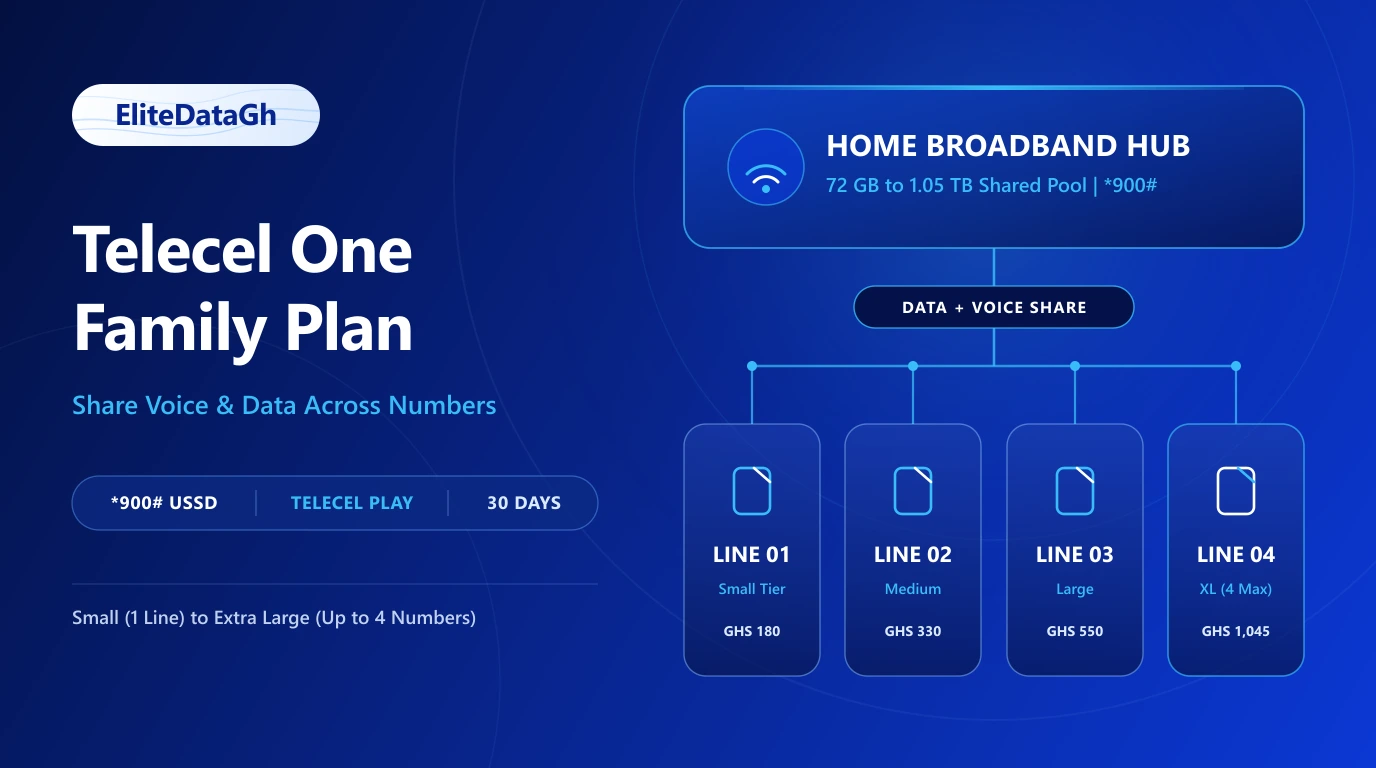
Telecel One Family Plan Explained: How to Share Voice and Data Across Numbers
Telecel One Family explained: dial *900# or use Telecel Play to share broadband data and voice across 1 to 4 paired numbers on 30-day household plans cleanly.
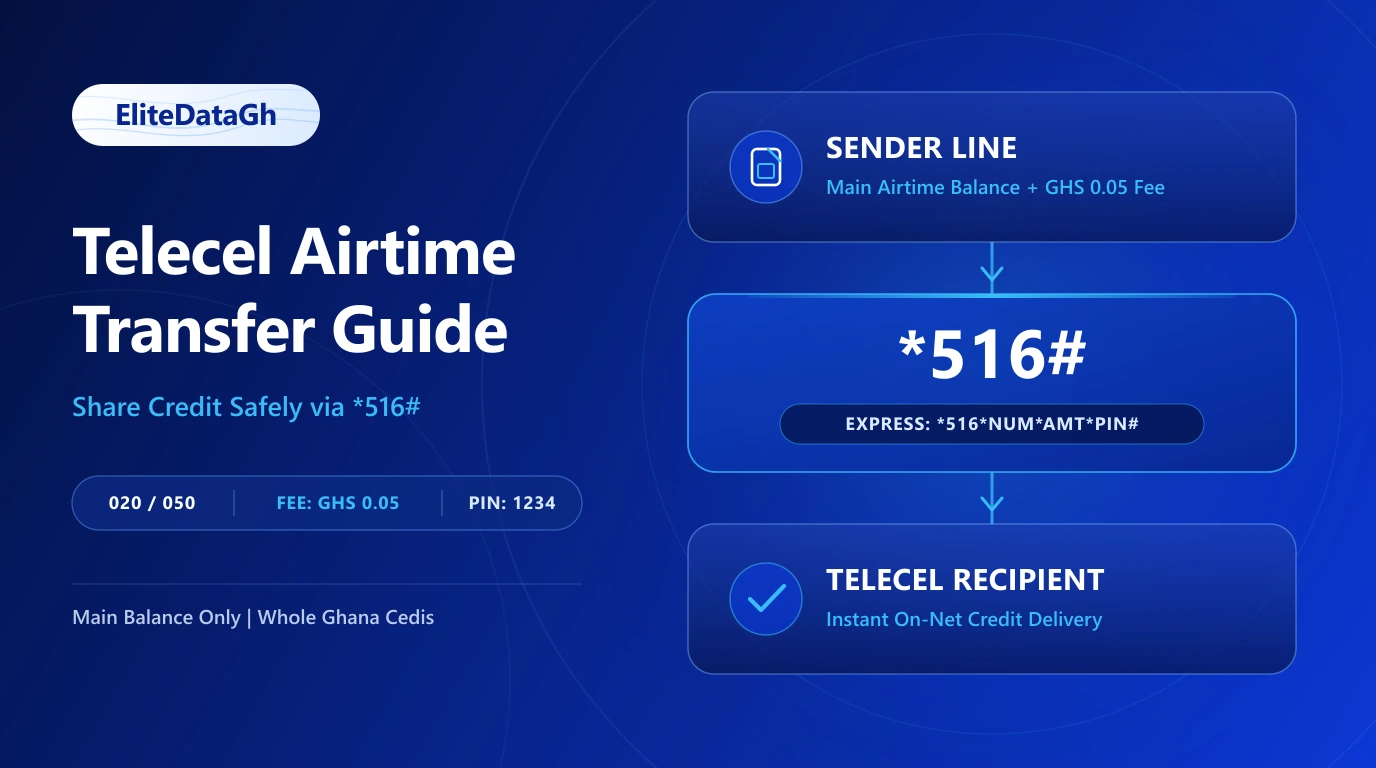
How to Share or Transfer Airtime on Telecel Ghana Using *516#
Dial *516# on Telecel Ghana to share airtime credit to 020 and 050 numbers. Learn the express code, GHS 0.05 fee, default 1234 PIN setup, and transfer rules.
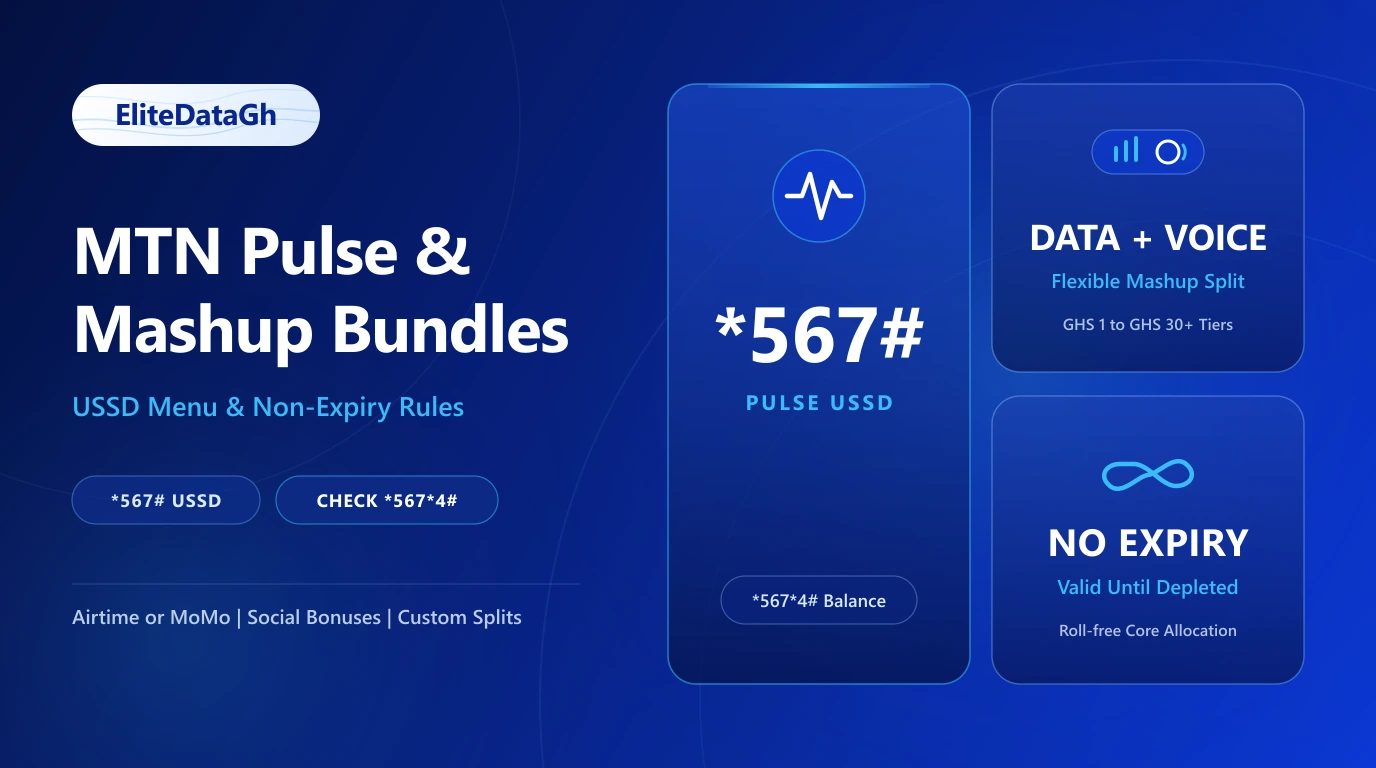
MTN Pulse and Mashup Bundles (*567#): Complete USSD Guide and Validity Rules
Dial *567# for MTN Pulse Mashup bundles in Ghana. Explore Voice and Data mix rules, social bonuses, non-expiry validity, and *567*4# balance checks cleanly.
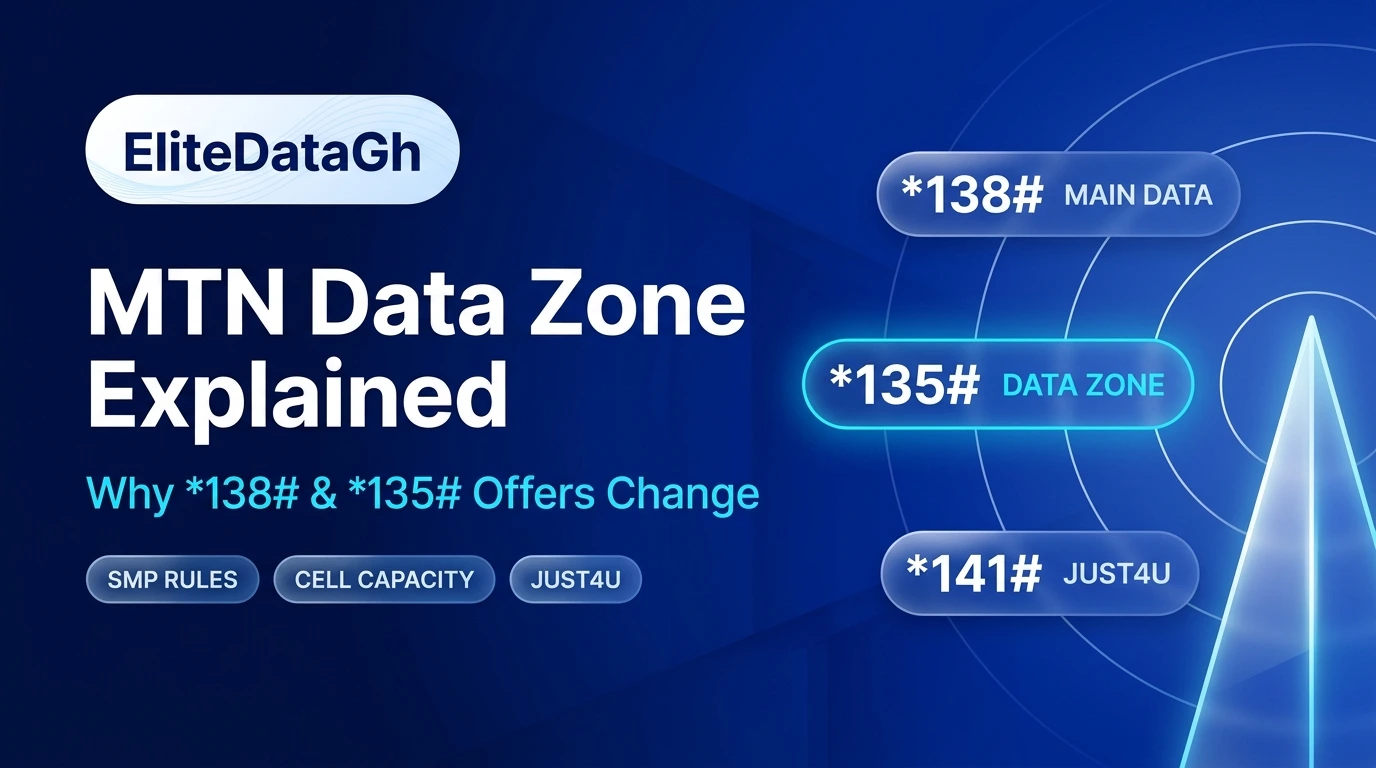
MTN Ghana Data Zone (*138#) Explained: Why Offers Disappear and How to Qualify
Learn why MTN Ghana Data Zone (*135# and *138#) and Just4U (*141#) offers change, how NCA SMP rules affect pricing, and how your SIM qualifies for better data.
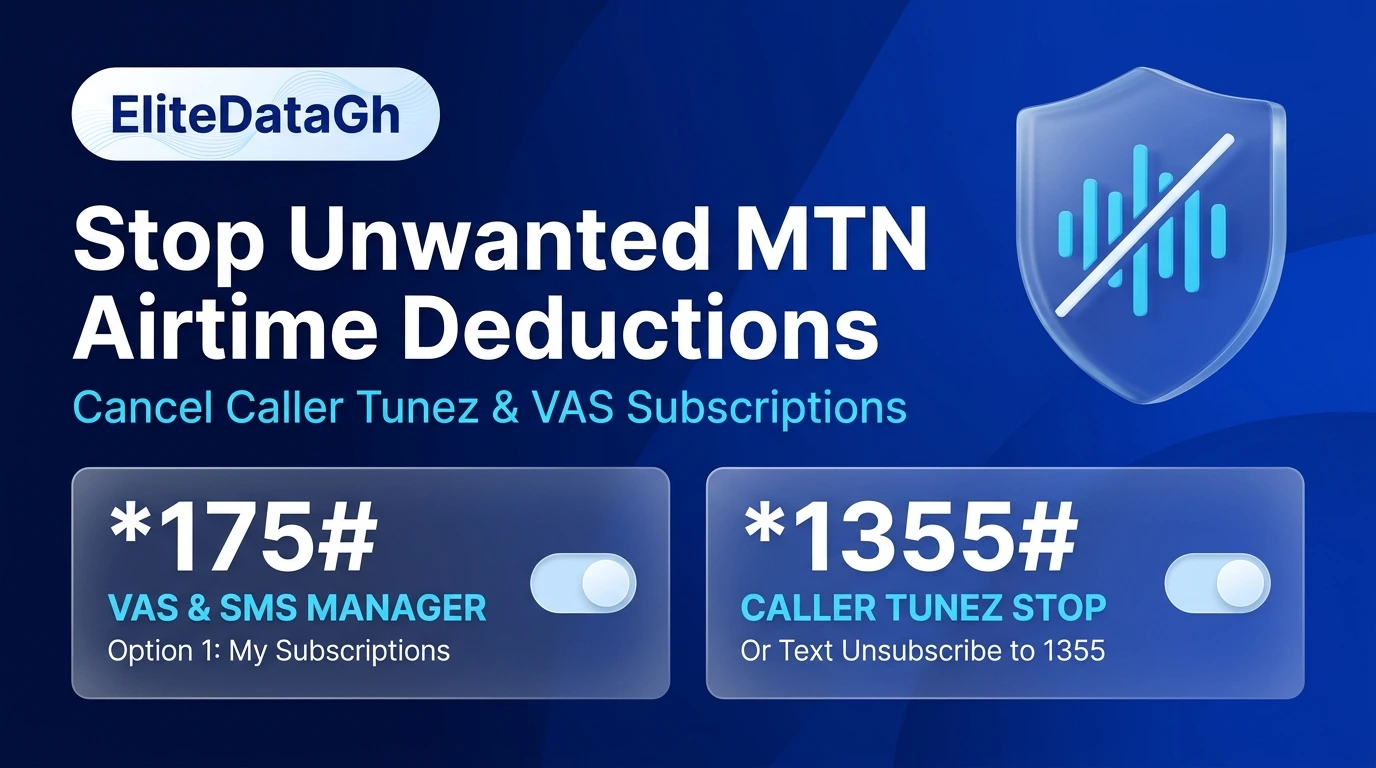
How to Cancel Unwanted Subscriptions and Caller Tunes Draining MTN Airtime
Cancel unwanted MTN Ghana subscriptions draining your airtime: dial *175# for VAS promos, *1355# or SMS Unsubscribe to 1355 for Caller Tunez, and STOP to 138.
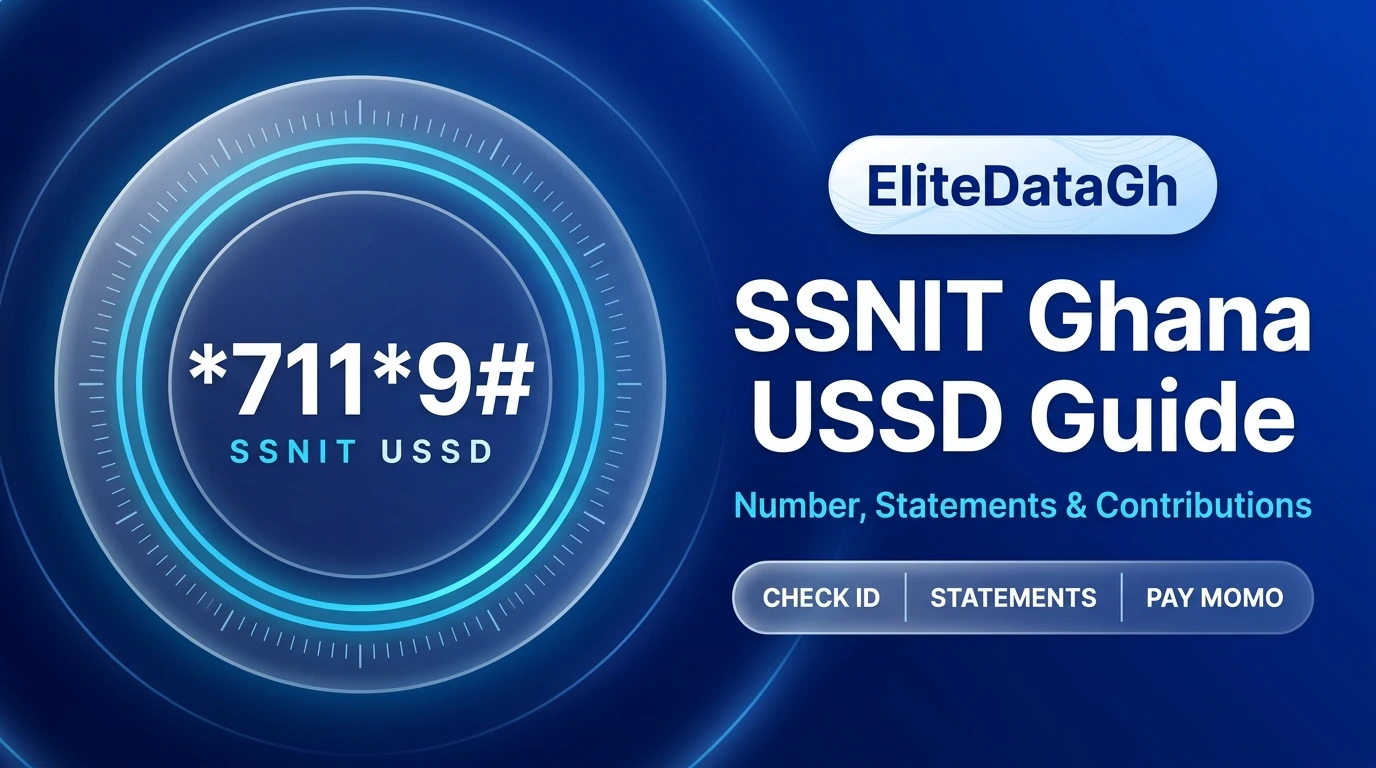
How to Check Your SSNIT Number, Statements, and Pay Contributions via USSD (*711*9#)
Dial *711*9# on MTN, Telecel, or AT to verify your SSNIT number, merge your Ghana Card, email contribution statements, and pay SEED MoMo contributions.
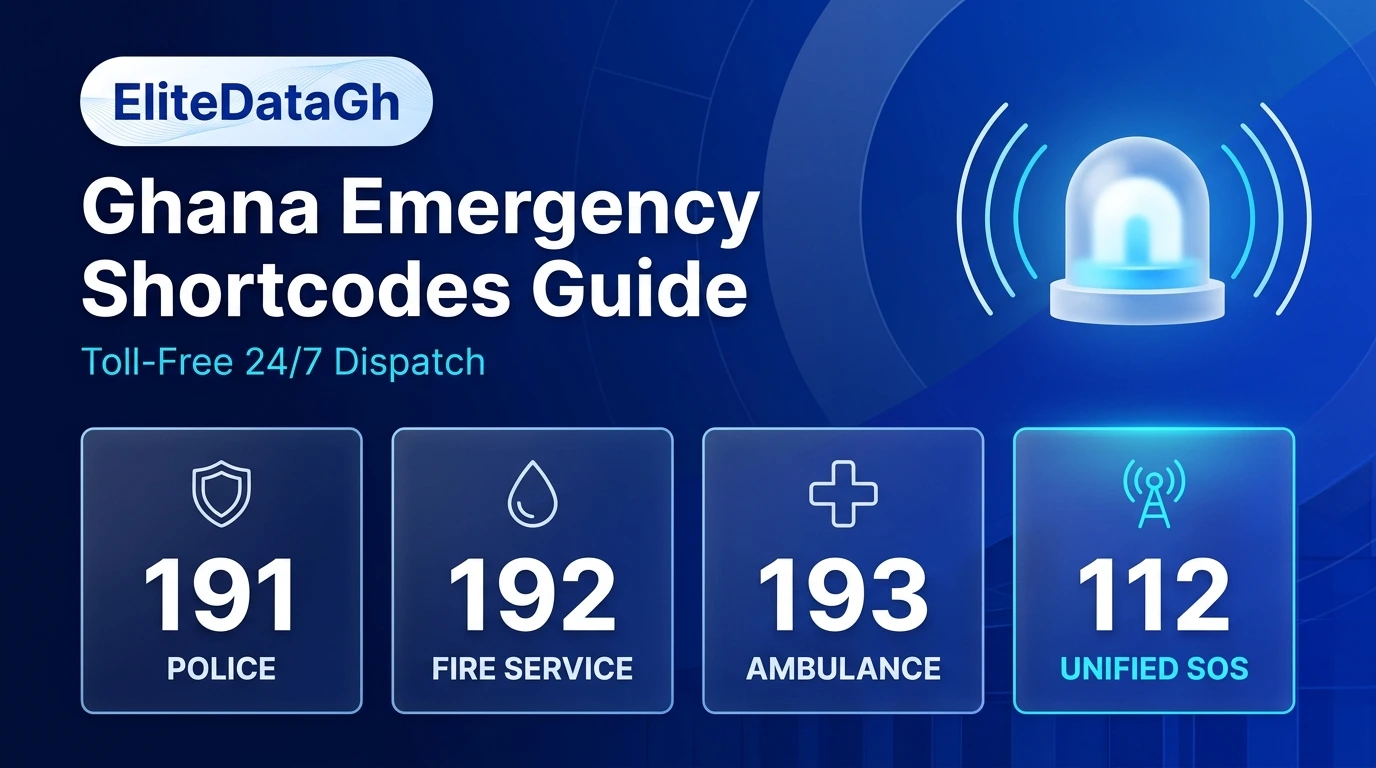
Complete Guide to Ghana Emergency Shortcodes: Police (191), Fire (192), Ambulance (193), and 112
Dial 112 toll-free in Ghana for unified Police (191), Fire (192), and Ambulance (193) dispatch, plus verified NADMO, DOVVSU, ECG, and 292 cyber hotlines.